

Regulating Robotaxis:
How Understanding New York City Can Shape a Better Statewide Legislative Proposal
Joann Fetner
April 2026
8 minute read
I. Introduction
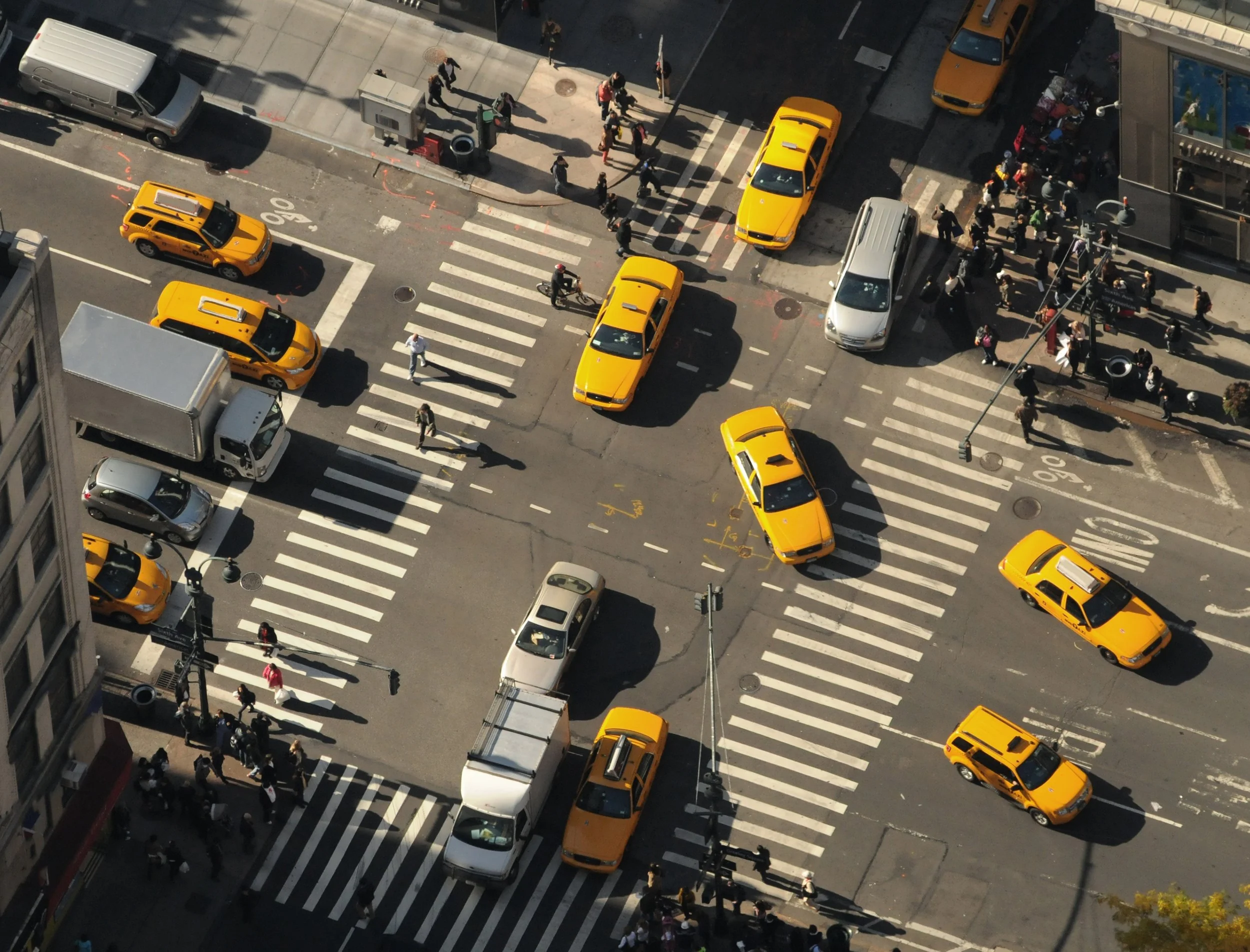
Since Fall 2025, Waymo, the autonomous taxi company, has operated under a permit to test its vehicles in New York City. Because state law requires a human driver to remain behind the wheel and prohibits passengers from booking Waymo rides, these trials remain highly restricted. [1] Waymo’s introduction of robotaxis may exacerbate existing challenges in New York City's transportation sector.. Following the rise of non-taxi rideshare services like Uber and Lyft, Waymo’s expansion may further replace New York City’s iconic yellow cabs.
In January of this year, New York Governor Kathy Hochul introduced a proposal in her State of the State address that outlined plans for a new initiative that would allow robotaxis to begin official operations outside of New York City. [2] Despite Hochul’s strong support for the proposal, it encountered substantial pushback. Opposition came from multiple groups, including rideshare drivers concerned about job displacement and labor unions raising safety concerns. Even the current mayor, Zohran Mamdani, expressed reservations about the potential impact on taxi drivers’ livelihoods. Consequently, in early February of this year, Hochul ultimately announced that she would withdraw the proposal. [3]
Given the range of perspectives on this issue, this article argues that a proposal allowing the introduction of robotaxis should more effectively address the potential concerns of this technology while also maximizing its benefits. Accordingly, this article will advocate for a state-level proposal that would:
Authorize unrestricted hours of operation for robotaxi services, ensuring that companies can operate continuously;
Mandate comprehensive and periodic safety inspections;
Require robotaxi operators to fund workforce protections for displaced drivers.
In discussing these measures, I will also examine their practical application within New York City.
II. Background on Robotaxis
Autonomous taxis, or robotaxis, represent a pivotal shift in transportation, offering on-demand mobility without personal car ownership. Among the leading companies in this space is Waymo. Originally launched as the Google Self-Driving Car Project in January 2009, the company operates under Google’s parent organization and has become a frontrunner in autonomous vehicle deployment. [4] As of November 2025, Waymo has deployed more than 2,500 robotaxis across the United States, marking a significant milestone in the commercialization of fully autonomous transportation. [5]
Autonomous taxis function by continuously creating and updating an internal map of their surroundings as well as incorporating hard-coded traffic rules, obstacle-avoidance algorithms, predictive modeling, and object-detection capabilities. Together, these features determine the vehicle’s speed, direction, and positioning, allowing the vehicle to follow traffic laws, anticipate the behavior of other road users, and safely navigate complex urban environments. [6]
As of March 2026, Waymo has experienced marked success across the US, and has fully established its rideshare systems in ten major cities: Phoenix, San Francisco, Los Angeles, Miami, Austin, Dallas, Houston, San Antonio, Orlando, and Atlanta. [7]
III. State-Level Proposal for Robotaxis
The following sections will aim to outline the three aspects of the state-level legislation proposal, and provide substantive arguments for their implementation. To do so, this discussion will draw upon the cultural and infrastructural features of New York City which make it suitable for the region.
A. Unrestricted Hours of Operation
The times in which robotaxis can operate should not be restricted. A principal argument in favor of expanding the deployment of these vehicles is their potential to enhance accessibility. A significant portion of the population is unable to drive due to age, disability, medical conditions, or other limitations. A fully autonomous, 24-hour transportation system would provide reliable mobility without requiring a human driver. With continuous service availability, users would no longer need to worry about arranging transportation or depending on others to reach their destinations, increasing both independence and convenience.
"Waymo has undertaken initiatives to improve accessibility for its users. This is underscored by Waymo’s recognition in the 2022 Inclusive Design Challenge hosted by the United States Department of Transportation. Selected as a semifinalist, Waymo was praised for working directly with disabled people to enhance accessibility across its Waymo One ride service platform. The submission featured accessible audio-visual alerts, vibration feedback, and hands-free features to better serve individuals with visual, physical, sensory, and cognitive disabilities. Accordingly, technologies such as Waymo could assist in increasing the autonomy of disabled individuals. According to Jeffrey Colon, the Director of Access Technology with LightHouse for the Blind in San Francisco: "The continued innovation of accessible autonomous driving technology is critical to help lower transportation barriers, and increase the travel mobility and independence for everyone, including riders with disabilities.” [8]
In New York City, this proposal would be highly applicable, since a majority of residents rely on public transportation for daily travel. Despite its centrality, the system remains insufficiently accessible to many users; for example, many subway stations lack elevator access, effectively blocking many individuals who have mobility impairments from utilizing this mode of transportation.
Moreover, the benefits of continuous availability not only improve physical accessibility but also personal safety. This is particularly the case for individuals who feel vulnerable traveling at night or uneasy about entering a vehicle operated by an unfamiliar driver. [9] Many individuals, particularly women, have reported instances of sexual assault in rideshares. Unlike human-driven ride-hailing services, which have been criticized for underreporting instances of sexual assault, autonomous vehicles eliminate the risk posed by dangerous drivers by removing their very presence. [10] Accordingly, legislation prohibiting temporal restrictions on robotaxi operations would not only enhance user independence and convenience but also expand access to safer transportation options—particularly during hours when such options are often limited.
B. Safety Inspections
Another central component of the proposal is that robotaxis must undergo regular and rigorous safety inspections. Autonomous vehicles present a significant opportunity to improve roadway safety, particularly by reducing accidents attributable to human error, including those involving impaired or negligent drivers. New York State Senator Jeremy Cooney, chairman of the Senate Transportation Committee, emphasized that autonomous vehicles represent “a real opportunity to increase driver and pedestrian safety across our state.” [11] Similarly, advocates such as Paige Carbone of Mothers Against Drunk Driving (MADD) argue that self-driving cars could prevent countless deaths and injuries caused by impaired driving "if deployed responsibly and safely.” [12] Empirical evidence appears to lend support to these claims. In a study led by Waymo in partnership with Swiss Re, researchers found that Waymo vehicles are involved in 88 percent fewer property damage claims and 92 percent fewer injury claims per mile than human drivers, suggesting that the robotaxis possess a measurable safety advantage. [13]
Notwithstanding these benefits, autonomous vehicles continue to exhibit limitations in handling certain real-world scenarios. Reports indicate instances in which these vehicles have entered restricted areas, including train tracks and active emergency scenes, or have stalled during power outages, thereby creating traffic hazards. As noted by Henry Liu, an engineering professor at the University of Michigan, “In like 95 percent of situations where a disengagement or accident happens with autonomous vehicles, it’s a very regular, routine situation for humans … These are not challenging situations whatsoever.” [14] While human drivers are also prone to error, this is often situational or psychological; error in robo-powered vehicles is caused by systematic technological error, which can be fixed with improvements to the software. Accordingly, mandating frequent inspections, maintenance, and updates is essential to identifying and correcting such deficiencies before they result in harm. Regular oversight would mitigate the risks associated with system malfunctions while preserving the broader safety benefits of the technology. Thus, in creating a regulatory proposal for the implementation of robotaxis, there must be legislation that underscores that these vehicles must require ongoing, rigorous safety inspections.
This is particularly important for New York City, since its dense and chaotic urban environment would present unique challenges for autonomous vehicles. Sam Schwartz, director of the transportation research program at Hunter College, described the region as having a dizzying volume of couriers, cyclists, and one-wheelers all sharing the same road. [15] Moreover, frequent jaywalking, unpredictable driver behavior, and congested streets further increase complexity, making New York City far less forgiving than other cities where robotaxis have been successfully deployed. Accordingly, legislation specific to New York City should require autonomous vehicle systems to account for the constant unpredictability of their surrounding environment. Such regulations could also mandate the inclusion of passenger-controlled safety features, including mechanisms that allow occupants to manually stop the vehicle or safely exit when necessary.
C. Workforce Protections
Finally, companies must assist in mitigating driver displacement by funding workplace protections for displaced drivers. Given New York City's reputation for its iconic yellow cabs, this aspect of the proposal is particularly practical for the area, especially since various stakeholders have already raised concerns about the potential displacement of taxi drivers. In a statement given by the president of the Transport Workers Union International, John Samuelsen, he asserts that Waymo’s “end goal is to replace rideshare drivers, taxi drivers, and transit workers with robots.” [16] Similarly, Josh Hawley, a Republican senator, wants to ban self-driving cabs because they are “terrible for working people,” since they may lead to job losses among taxi drivers. [17] In addition, Bhairavi Desai, the executive director of the New York Taxi Workers Alliance, which represents more than 28,000 taxi, Uber, and Lyft drivers in the city, said she welcomed Governor Hochul’s decision to rescind her initial proposal to introduce robotaxis outside the city. She warned that widespread automation could displace tens of thousands of drivers, threatening the livelihoods of “hundreds of thousands of workers.” [18] As such, in considering the widespread risks faced by the city’s taxi drivers, funding workplace protections could encompass measures such as wage insurance, income stabilization, and retraining support for displaced taxi drivers. One way to generate this funding is by implementing a per-ride fee on all robotaxis, with the proceeds directed immediately toward the workplace protection fund.
IV. A Possible Alternative?
Given the discussed aspects of a potential legislative proposal in New York City, if robotaxis were introduced, it would need to be carefully and reflectively. At the same time, it is fair to question whether the challenges these vehicles claim to address must be solved through automation. While the allure of a self-driving future is strong, evidence suggests that robotaxis are not the only way to improve safety on the streets. For instance, cities such as Helsinki and Oslo have recently gone a full year without a single pedestrian or cyclist fatality. Their success stems largely from their implementation of strong legal frameworks that prioritize lower speed limits, wider sidewalks, higher car fees, and stiffer enforcement. [19] Specifically, regarding higher car fees, not only is the cost of upkeep quite expensive, but all vehicles in Finland have a general sales tax of 25%. [20]
While these achievements are notable, the frameworks adopted by these cities have not automatically translated to the New York context, nor should they be. The legal, cultural, and infrastructural landscape of New York City differs significantly, meaning policy solutions cannot be copied and pasted. In particular, US cities tend to be more car-dependent, with regulatory systems being historically designed to accommodate vehicles, rather than minimize their role. As such, while it is possible to implement higher car fees in Finland, this is not as possible for New York. In contrast to Finland’s 25% tax rate, car sales in New York State have an average state tax of 4%. [21] Accordingly, adjusting the tax rate to match Finland’s would likely result in major outcry and not be a feasible solution to road safety. As a result, the policy conversation in New York City should not focus on reducing car usage, but on how emerging technologies such as Waymo can be safely integrated into an already-existing system.
V. Conclusion
In conclusion, the adoption of robotaxis in New York presents both significant opportunities and substantial challenges. While autonomous vehicles have the potential to improve personal safety and accessibility, their deployment should not come at the expense of human workers or public safety. As such, a carefully designed state-level proposal should balance these competing interests. Thus, a legislative proposal that authorizes unrestricted hours of operation, mandates rigorous and ongoing safety inspections, and requires operators to fund protections for displaced taxi drivers can ensure that the benefits of robotaxis are realized without undermining driver livelihoods or compromising safety on the streets.
[1] NYC Dot, “Autonomous Vehicles in New York City.”
[2] Hochul, State of The State 2026.
[3] Palmer et al., “New York Gov. Hochul drops robotaxi service proposal for outside NYC in blow to Waymo.”
[4] L, “Waymo Hits 2,500 Robotaxis in US, Shaping the Future of Driverless Rides.”
[5] Marr, “Key Milestones Of Waymo - Google’s Self-Driving Cars.”
[6] Union Concerned Sci., “Self-Driving Cars Explained.”
[7] Muller, “Waymo Robotaxis Now Available in 10 Cities.”
[8] Waymo, “Waymo’s Accessibility Work with Advocates Recognized by U.S. Department of Transportation.”
[9] Lee, “I’m a Woman Who Had a Bad Experience in a Waymo. I Still Think It’s Safer than a Human Driver.”
[10] Steel and Steel, “Uber’s Festering Sexual Assault Problem.”
[11] Chen and McCabe, “New York to Back Away From Robotaxi Pilot Programs Upstate.”
[12] Prussin and Keleshian, “Self-Driving Cars Coming to NYC as Waymo Is given Green Light for Testing.”
[13] Waymo, “New Swiss Re Study.”
[14] Zipper, “We Still Don’t Know If Robotaxis Are Safer Than Human Drivers.”
[15] Chen and McCabe, “New York to Back Away From Robotaxi Pilot Programs Upstate.”
[16] Quinlan, “Waymo Gets First NYC Permit to Test Self-Driving Vehicles.”
[17]The Economist, “Unleash the Robotaxi Revolution.”
[18] Chen and McCabe, “New York to Back Away From Robotaxi Pilot Programs Upstate.”
[19] Zipper, “We Still Don’t Know If Robotaxis Are Safer Than Human Drivers.”
[20] eCarsTrade, “Car Taxes and Tax Rates in Finland 2025 & 2026.”
[21] Avalara, “2026 New York Sales Tax Calculator & Rates.”